Measurement guide
Planning and quantities
How much fence does one hectare need?
A field's area tells you how much ground it covers. It does not tell you how long its boundary is. Before asking for a fencing quote, measure the line where the fence will actually run and identify every opening. Two fields advertised as one hectare can require very different quantities of the same mesh.
Land Ruler · · 4 min read
Start with shape, not area
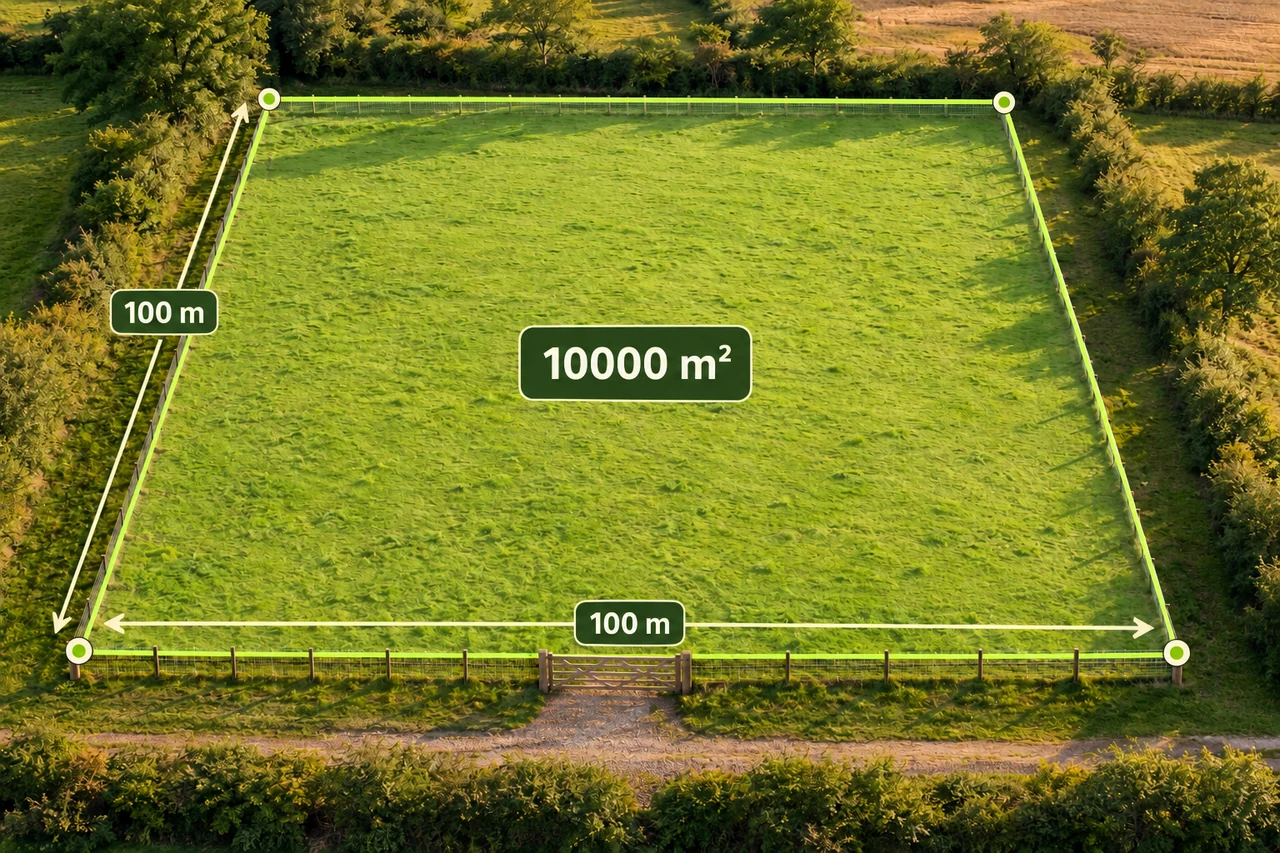
For a rectangle, multiply length by width to find area and add all four sides to find perimeter: P = 2 × (length + width). The examples below deliberately keep the area unchanged at one hectare, or 10,000 m². Stretching the rectangle increases its boundary. A square is therefore a useful comparison, but assuming every hectare is square can badly understate an order.
| Dimensions | Area | Perimeter |
|---|---|---|
| 100 × 100 m | 10,000 m² | 400 m |
| 50 × 200 m | 10,000 m² | 500 m |
| 25 × 400 m | 10,000 m² | 850 m |
Measure the proposed fence line
An irregular parcel needs a segment-by-segment measurement, including recesses and bends. Follow the intended fence alignment instead of drawing a convenient rectangle around the field. Keep internal divisions separate from the outer boundary, then add them only if they belong to this job. A map measurement is a horizontal planning length; terrain, obstacles and the final installation route can change the material actually used. Confirm the boundary on site before committing permanent posts.
Inspect the calculation diagram
Subtract openings, then round rolls upward
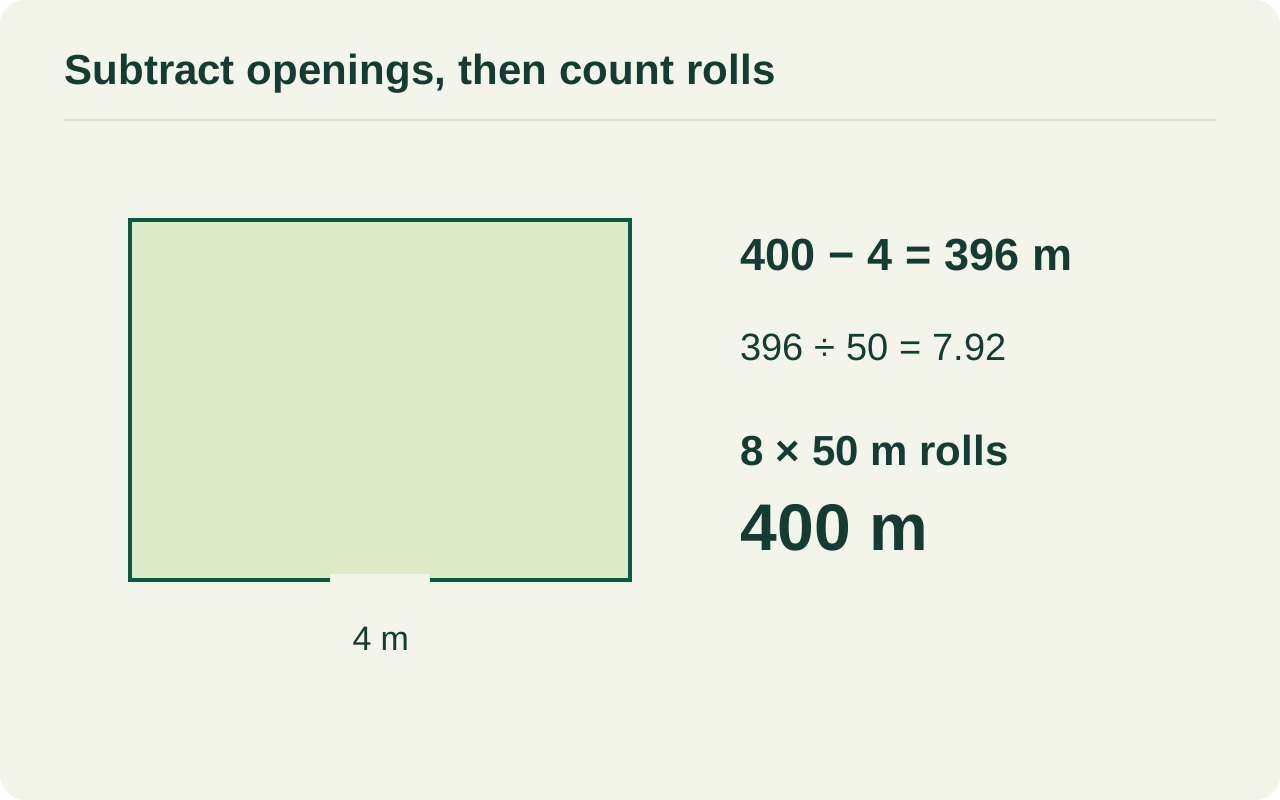
For the square example, write 400 − 4 = 396 m of continuous mesh coverage. With 50 m rolls, 396 ÷ 50 = 7.92, so the minimum whole-roll count is eight. Those rolls contain 400 m in total, only 4 m more than the calculated coverage. That difference is not a complete installation allowance. Joins, cuts, damaged ends and product-specific fixing requirements must be checked separately with the installer or supplier; do not apply an unexplained universal percentage.
Separate mesh, wire strands and posts
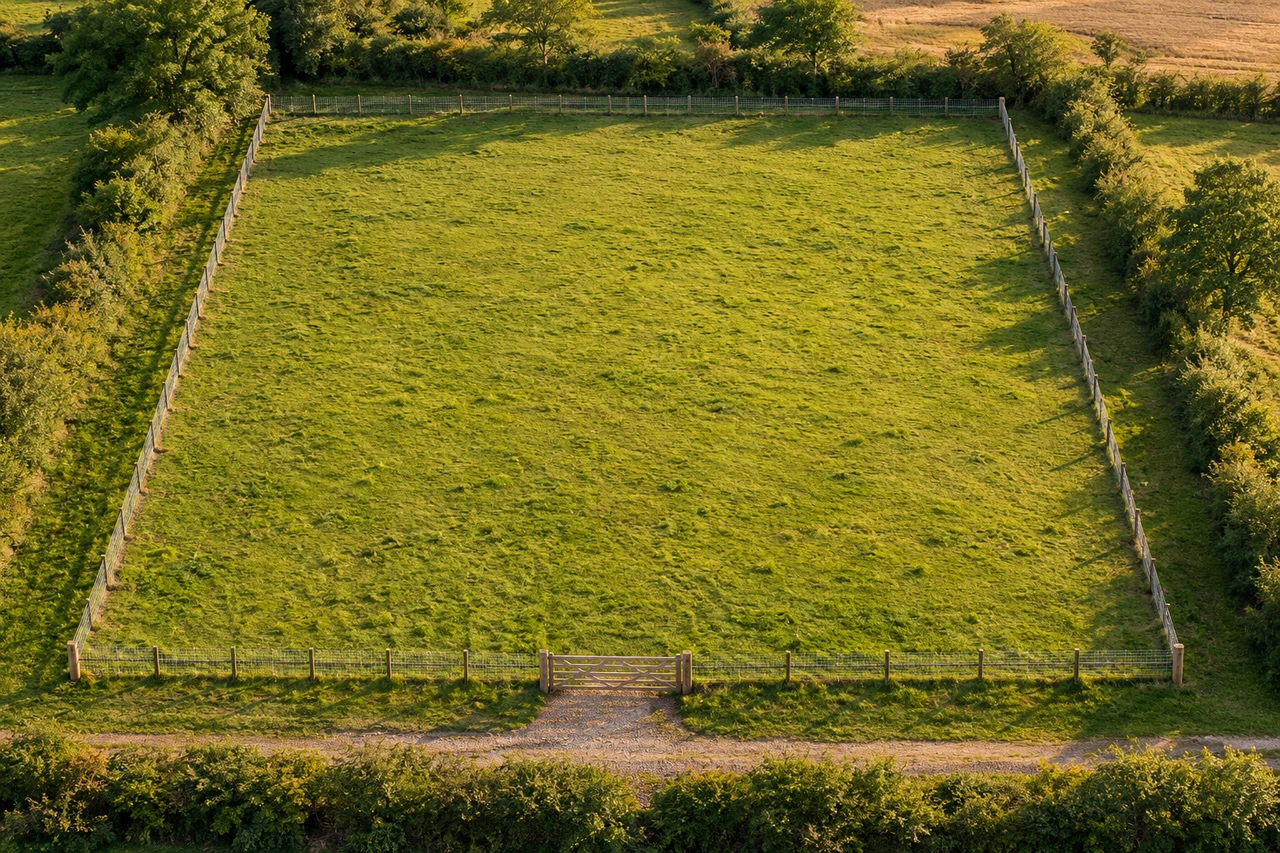
A metre of mesh describes a metre along the fence at a chosen product height. Separate wire strands are counted differently: three complete strands along 396 m would have a theoretical combined length of 1,188 m before allowances. That does not mean you need 1,188 m of mesh. Keep line posts, corner assemblies, gate posts, braces and the gate itself on separate lines in your materials list. Their quantities depend on the chosen system and layout.
Avoid a universal post-spacing shortcut
Dividing total perimeter by an arbitrary post spacing misses important details. A gate creates ends, a corner may require bracing, and a curved run can need a different arrangement from a straight one. UGA's farm fencing guidance treats these assemblies and curves separately. Use the fence manufacturer's design and suitable local advice to set spacing. Also check whether a shared side will be fenced in this project: subtracting it without agreement can leave a real gap in the scope.
Turn the estimate into a quote-ready note
Use LandRuler's distance measurement to trace the visible proposed route, then record gates and any internal runs separately. Give each fence segment a start, finish and length in a simple sketch or worksheet; mark which segments contain an opening so each gate is deducted once. Check area units only to confirm that you are discussing the same parcel size. Give the supplier the measured length, fence type and height, gate widths, corner count and unresolved site conditions. Recheck ambiguous bends on the ground. This produces a useful first quantity estimate while leaving the actual post layout and purchase allowance to the installation plan.
Try your own numbers
This calculation uses the geometric assumptions explained in the article.
Common questions
Does one hectare always need 400 m of fence?
Only a 100 × 100 m square has that perimeter in these examples. Area alone cannot determine boundary length.
Are eight rolls a final order recommendation?
No. Eight is the whole-roll minimum for 396 m at 50 m per roll, before the installation-specific allowance and product checks.
Sources and calculation notes
Figures and numerical scenarios are explanatory examples, not observed field results or application screenshots. Sources support the concepts listed below.
- NIST: SI units — area
Supports the hectare definition; rectangle comparisons and roll arithmetic are original worked examples.
- UGA Extension: Fences for the Farm
Supports checking fence alignment and treating corners, ends, gates and curved runs as separate construction decisions.
Continue learning
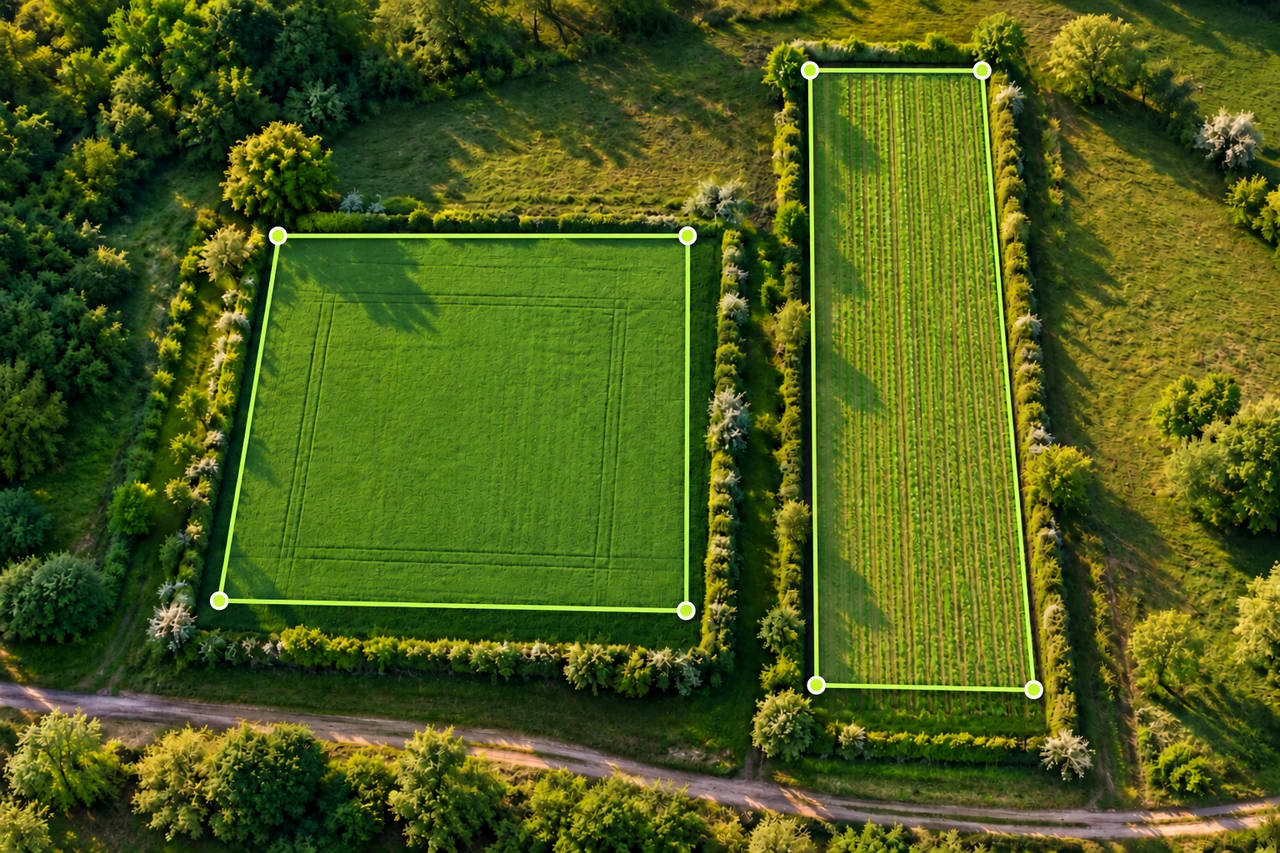
Land shapes and geometry
Can square metres become metres? Can perimeter give area?
Understand the missing dimensions behind area-to-length questions, with rectangles that share a perimeter or area but have different shapes.
Read the guide →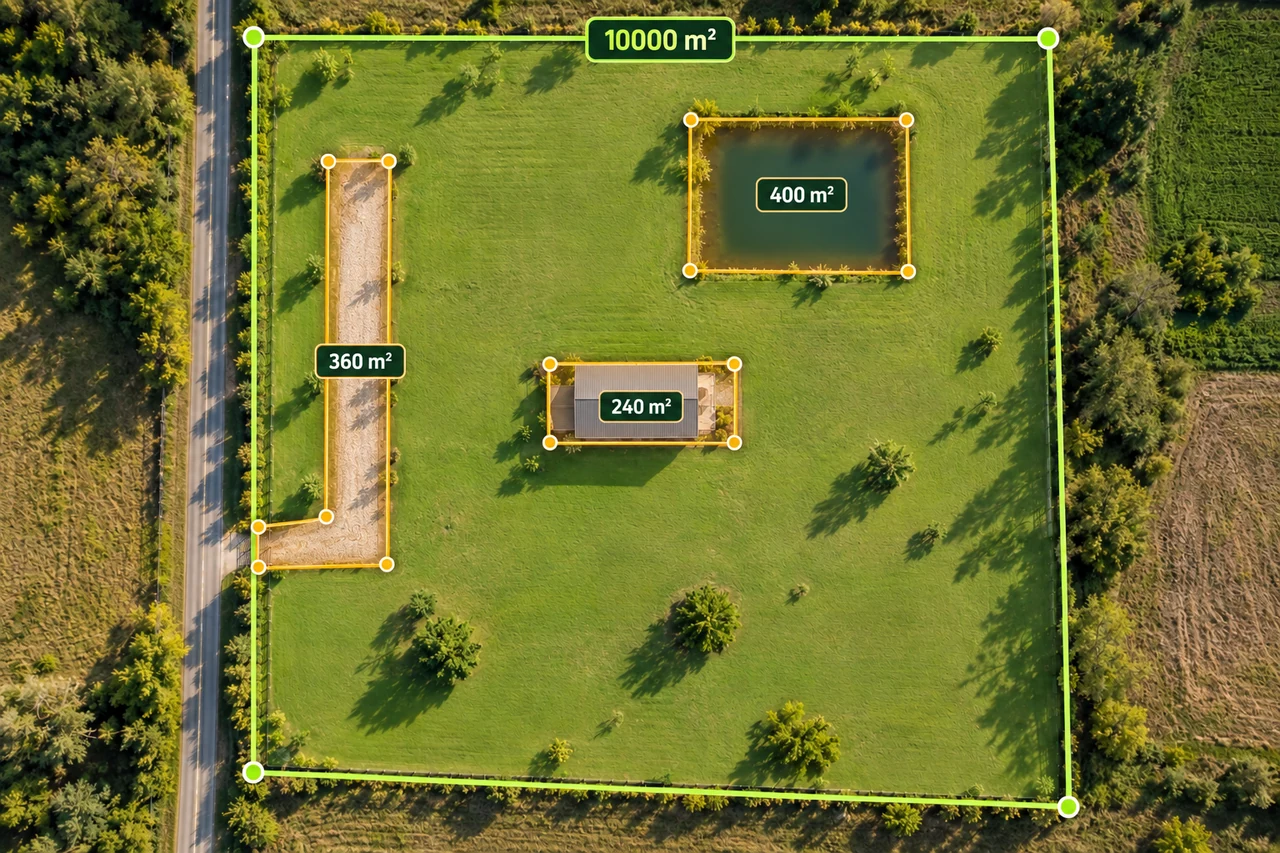
Planning and quantities
Calculate usable land area without subtracting twice
Build a transparent gross-to-net land area worksheet with buildings, access and water exclusions, including overlapping shapes.
Read the guide →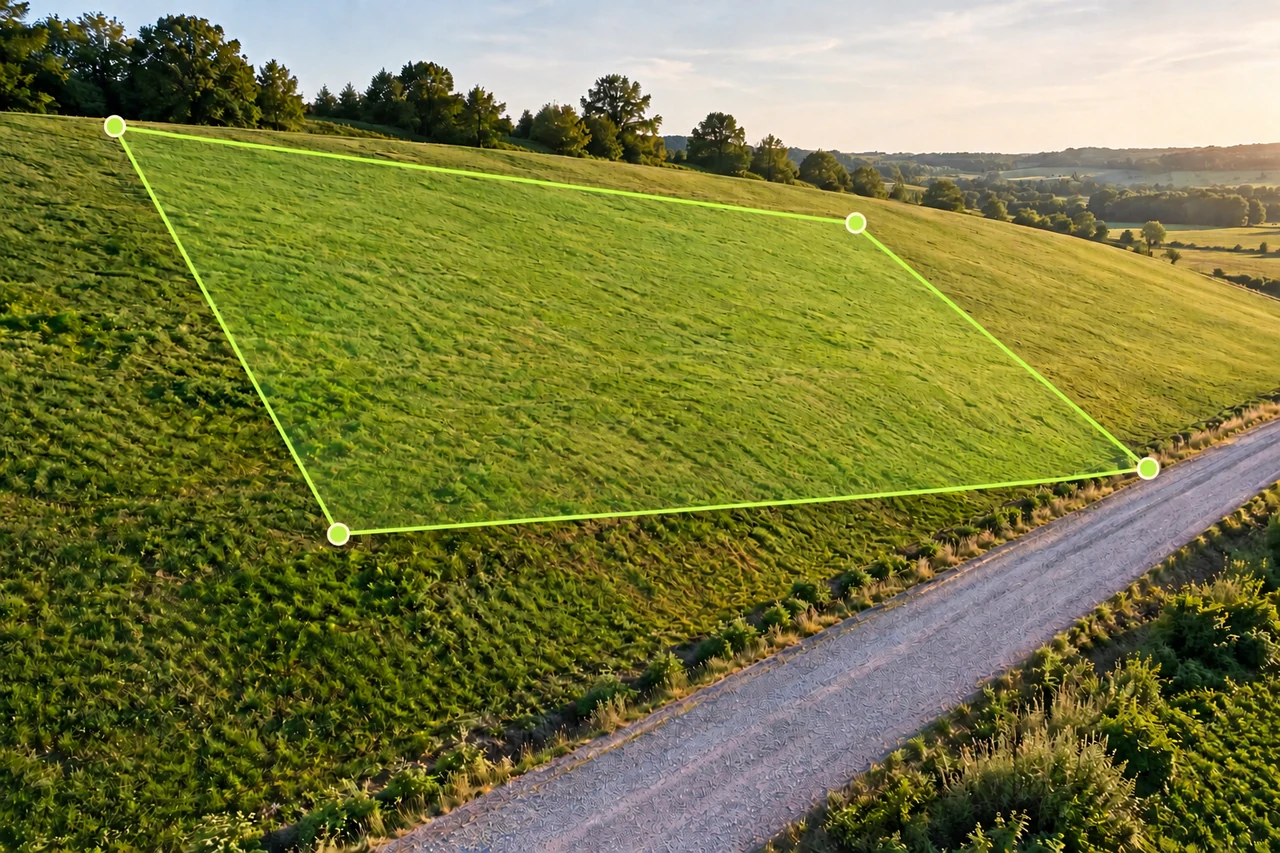
Accuracy and coordinates
Horizontal land area vs sloped surface area: a worked example
Learn why map area and hillside surface area differ, calculate a uniform 20° slope example, and avoid applying average slope to irregular terrain.
Read the guide →