
How water volume is estimated
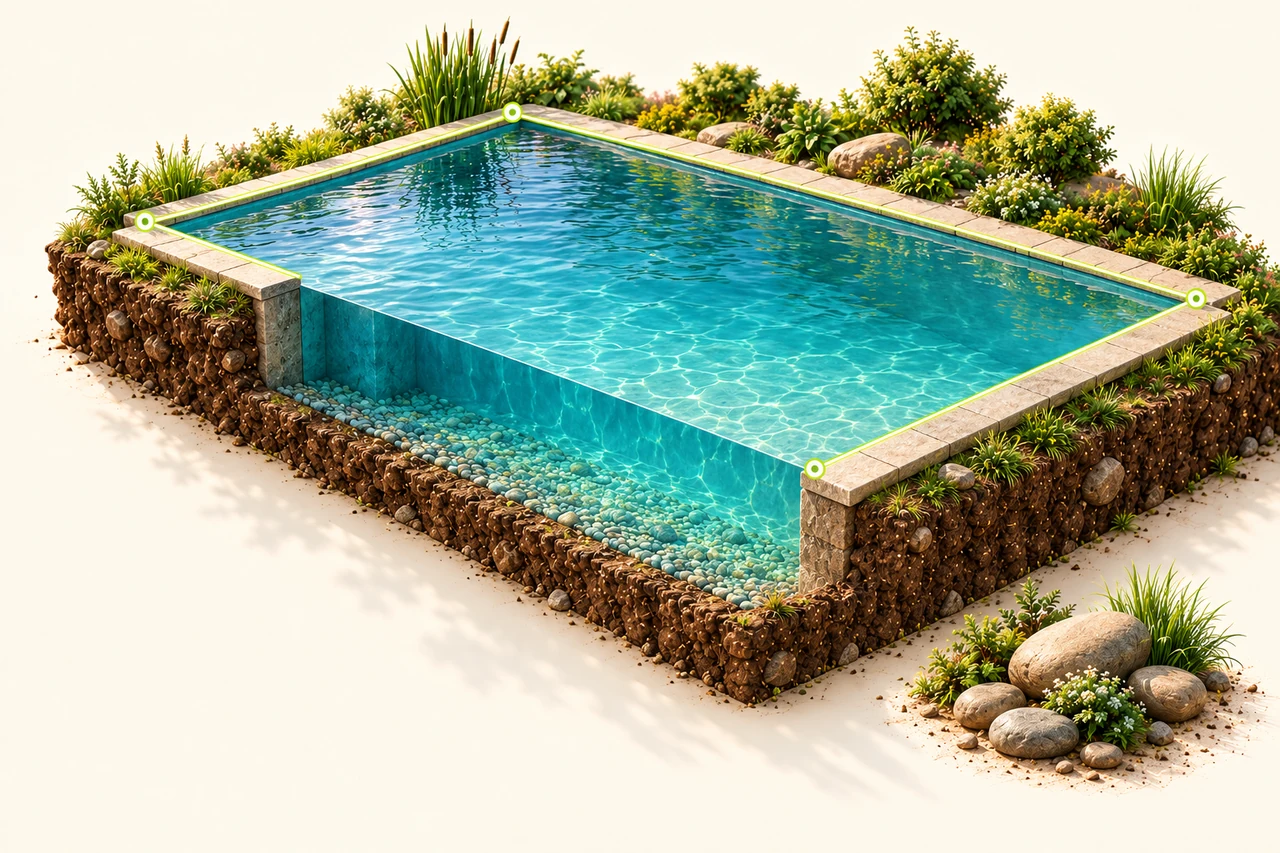
Multiply the water surface area by the average water depth. For a rectangle, the surface area is length × width. The example is 10 m × 5 m × 1.5 m, giving 75 m³ or 75,000 litres. Unit conversions are applied before displaying cubic metres and litres.
Use a representative average depth
Average depth must represent the whole surface area at the intended water level. If shallow and deep sections cover different areas, weight their depths by those areas. Entering the deepest point alone overestimates the volume. Steps, shelves and slopes affect the average.
For a known surface area
Choose “I know the surface area” to use an area you have measured already. For an irregular pond, surface area × an area-weighted average depth is a planning estimate; it does not reconstruct the underwater shape or provide a surveyed capacity.
Pool and pond volume questions
Can I enter feet?
Yes. Length and width can use feet or metres, and average depth has its own feet/metres choice. The result is converted to cubic metres and litres.
Is this the exact capacity of an irregular pond?
No. Its reliability depends on the measured surface area and whether the entered average depth represents the basin. An underwater survey or more detailed sectional calculation may give a different result.
Does measuring on the map transfer my area here?
Measure the surface on the map, choose this calculator and press Use this measurement. The area is filled in known-area mode; enter the average depth yourself.